How It Works
A strict cascade from dock to mulch — with landfill nowhere on it.
Reuse beats recycling; recycling beats disposal. We apply that order to every single pallet, and we measure ourselves by how little escapes as waste.
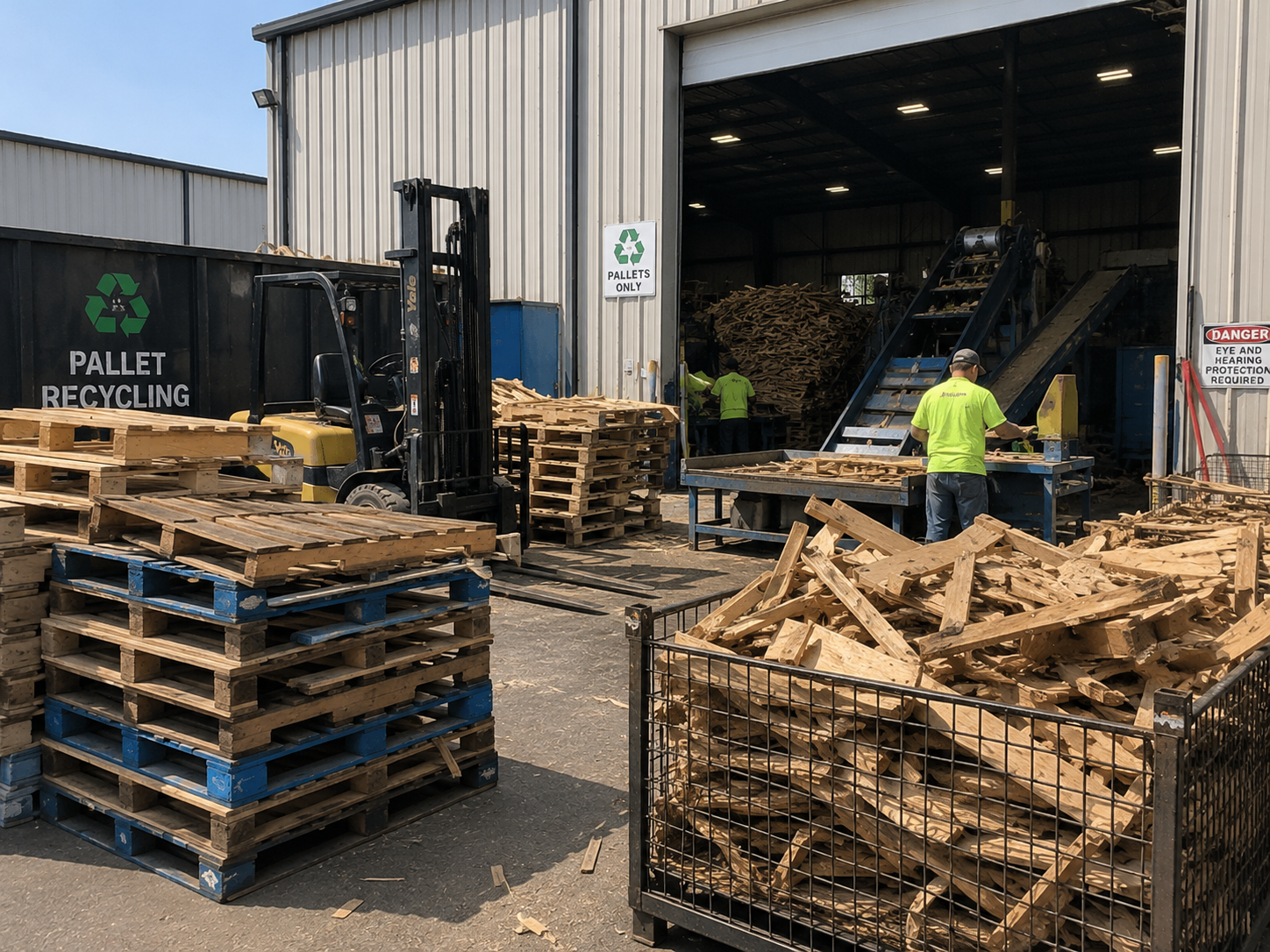
Every pallet runs a six-stage cascade: collection, triage, reuse whole, repair, remanufacture, and — only when a board can give no more — grinding into mulch and biomass. We divert 100% of collected wood from landfill.
Request a quote
Every field routes straight to our yard team. Tell us the product, the volume, and where you are — we reply by email within one business day.
Collection
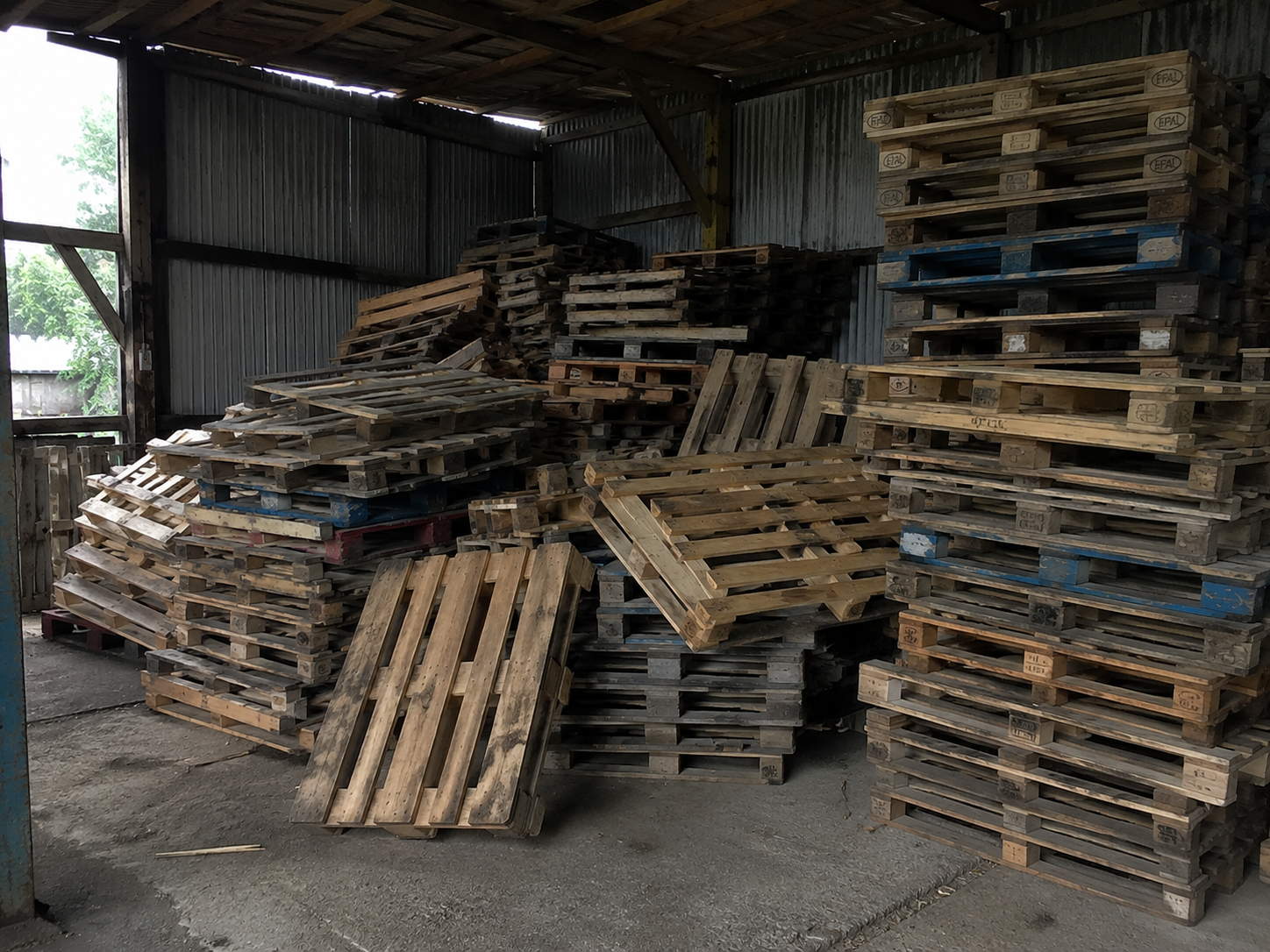
Cores arrive from our buy-back customers, drop-offs at the yard, and our own removal routes across the tri-state. Every load is logged by source.
Triage & sorting
Each pallet is inspected and sorted by size and condition. This first sort decides the shortest possible path back into service.
Reuse (whole)
Structurally sound pallets are cleaned, banded, and re-shelved as Grade A or B stock — ready to ship again, often within days.
Repair
Pallets with a fixable defect hit the repair bench: replaced deck boards, re-nailed joints, plugged stringers — rebuilt with reclaimed lumber.
Remanufacture
When a frame is truly spent, we harvest its good boards and blocks to build 'combo' pallets — new life from multiple retired ones.
Grind — last resort
Only wood that can give no more is ground into landscaping mulch and biomass fuel. Nothing collected is ever trucked to a landfill.
The rule that runs it all
If it leaves as trash, we did it wrong.
That's not a slogan on a wall — it's the metric on the whiteboard. When something can't find a downstream use, we treat it as a process failure to be engineered out, not an acceptable loss.
How we grade
The sort that decides everything.
Grading is where a pile of used wood becomes usable inventory. Every pallet gets read for size, entry type, and structural condition — then routed to the shortest path back into service.
| Grade | Condition | Typical use |
|---|---|---|
| #1 (Grade A) | Near-new, no visible repairs, clean and square. Full load rating intact. | Shippers and distributors who need dependable, presentable pallets. |
| #2 (Grade B) | Sound and reliable, may show light repairs or wear. Full structural strength. | General warehousing, internal moves, and cost-sensitive freight. |
| Remanufactured (combo) | Rebuilt from good boards and blocks harvested off retired pallets. | Budget applications where appearance matters less than function. |
| Heat-treated (HT / ISPM-15) | Any grade, kiln heat-treated and HT-stamped for phytosanitary compliance. | International export shipments requiring ISPM-15 certification. |
We handle the full range of designs along the way: 48×40 GMA “grocery” pallets, block and stringer construction, Euro/EPAL sizes, and both two-way and four-way entry. If your load has a specific rating or footprint, we sort or build to match it.
Intake to delivery, in detail
What actually happens between the docks.
1 · Intake & logging
Loads arrive from buy-backs, drop-offs, and our removal routes. Each is counted and logged by source, so we can trace volumes and, for account customers, report diversion tonnage.
2 · Sort & grade
Pallets are read for size, entry type, and condition, then split into reuse-whole, repair, and remanufacture streams. This first sort determines the fastest route back to your dock.
3 · Repair
Fixable pallets hit the bench: replaced deck boards, re-nailed and plugged stringers, reinforced joints — all with reclaimed lumber, rebuilt back to full grade.
4 · Remanufacture
Frames too far gone to repair are broken down and their sound boards and blocks harvested to build combo pallets — new stock from several retired ones.
5 · Quality control
Before anything ships, it's checked for square, fastener integrity, and load rating. Export pallets are verified for heat treatment and the HT stamp.
6 · Stage & deliver
Finished stock is banded, staged, and loaded onto our own trucks for scheduled tri-state delivery — with the leftover wood ground for mulch, never buried.
Quality control
What you order is what shows up.
A grade only means something if it's consistent. Every pallet that leaves the yard clears a final check so a #1 is genuinely a #1 and a #2 is genuinely sound.
- Checked for square, twist, and fastener integrity.
- Verified against the grade and count on your order.
- Load rating and entry type confirmed for the intended use.
- Export units confirmed heat-treated and HT-stamped for ISPM-15.
Turnaround expectations
How fast, honestly.
We'd rather set a window we can hit than promise one we can't. Here's what to expect from first email to loaded truck.
Quotes
We reply to every request by email within one business day — usually with a firm price and availability.
In-stock orders
Standard 48×40 stock and common grades can often go out within a few business days, subject to volume and scheduling.
Custom & export builds
Custom sizes, heavy skids, and heat-treated export units take longer — we'll give you a real lead time up front, not a guess.
Process questions
What people ask about how we work.
How do you decide whether a pallet is reused, repaired, or remanufactured?
It comes down to structure. A sound pallet is cleaned and re-shelved; one with a fixable defect goes to the repair bench; a frame that's truly spent is broken down and its good boards harvested for combo builds. Reuse always beats recycling, so we choose the shortest path that still meets grade.
What do the grades #1, #2, and remanufactured mean?
#1 (Grade A) pallets are near-new with no visible repairs; #2 (Grade B) are sound and reliable with light wear or repairs; remanufactured 'combo' pallets are rebuilt from good boards and blocks recovered from retired pallets. All three keep full structural function for their intended use.
Can you supply ISPM-15 heat-treated pallets for export?
Yes. We provide heat-treated, HT-stamped pallets compliant with ISPM-15 for international shipping, in the size, load rating, and entry type you need. Export units are confirmed for treatment during quality control.
What's the difference between block and stringer pallets?
Stringer pallets use parallel boards (stringers) to support the deck and are often two-way entry; block pallets use solid blocks at the corners and center, allowing true four-way forklift and pallet-jack entry. We stock and build both — tell us how you'll be handling the load and we'll match it.
How quickly can I get pallets?
We quote within one business day. In-stock standard pallets can often ship within a few business days; custom and export builds take longer, and we'll give you a firm lead time up front rather than an optimistic guess.
What happens to wood you can't reuse?
Nothing collected goes to landfill. Wood that can give no more is ground into landscaping mulch and biomass fuel — the last, and only, stop in the cascade after reuse, repair, and remanufacture are exhausted.
Let's put your pallets back to work.
Buying, selling, recycling, or hauling — one form, one business-day reply, zero phone tag.