Products
Pallets, parts, and everything built from a board.
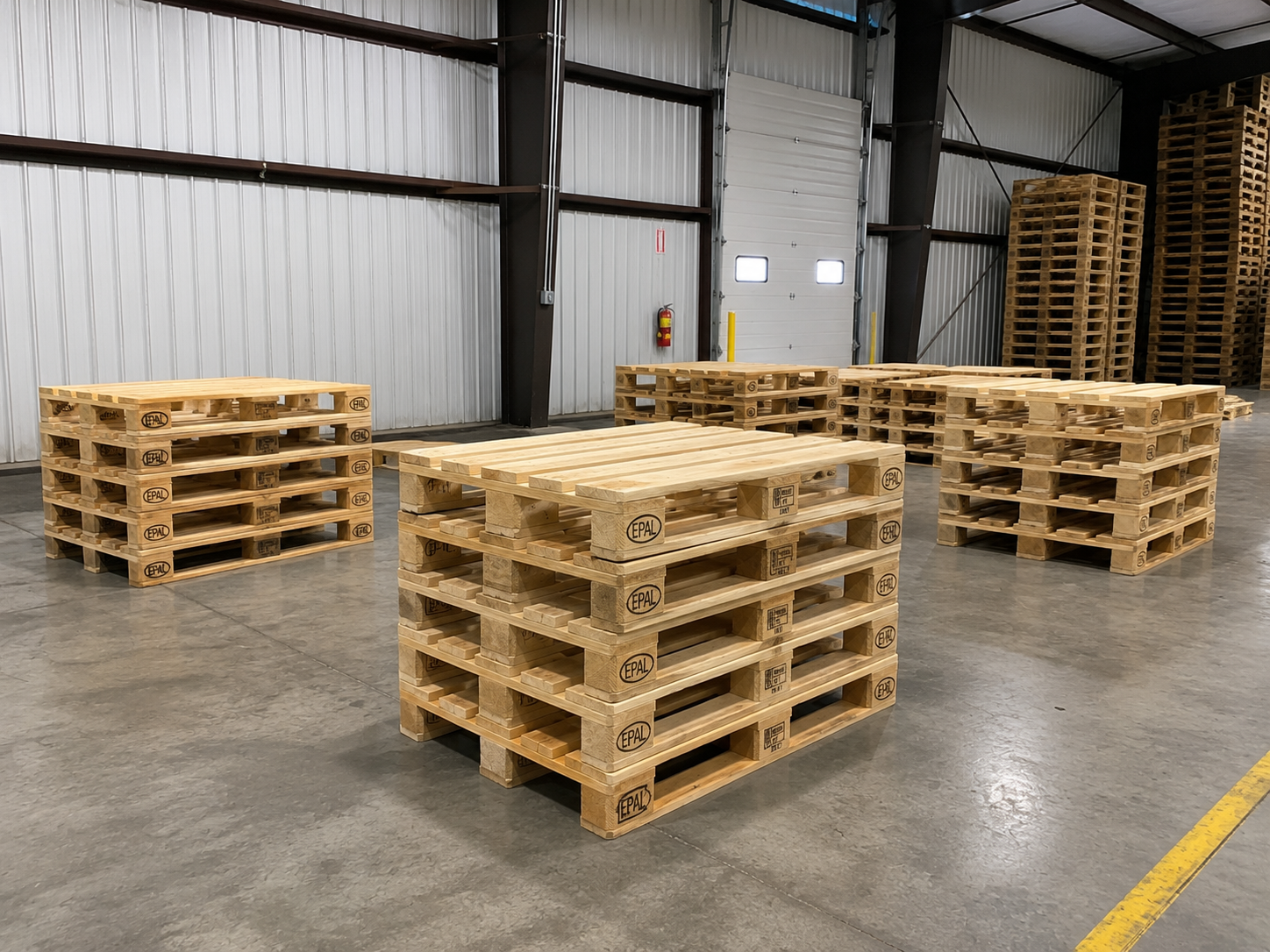
From a single reclaimed deck board to a truckload of Grade A 48×40s, here's what leaves our Este Ave yard.
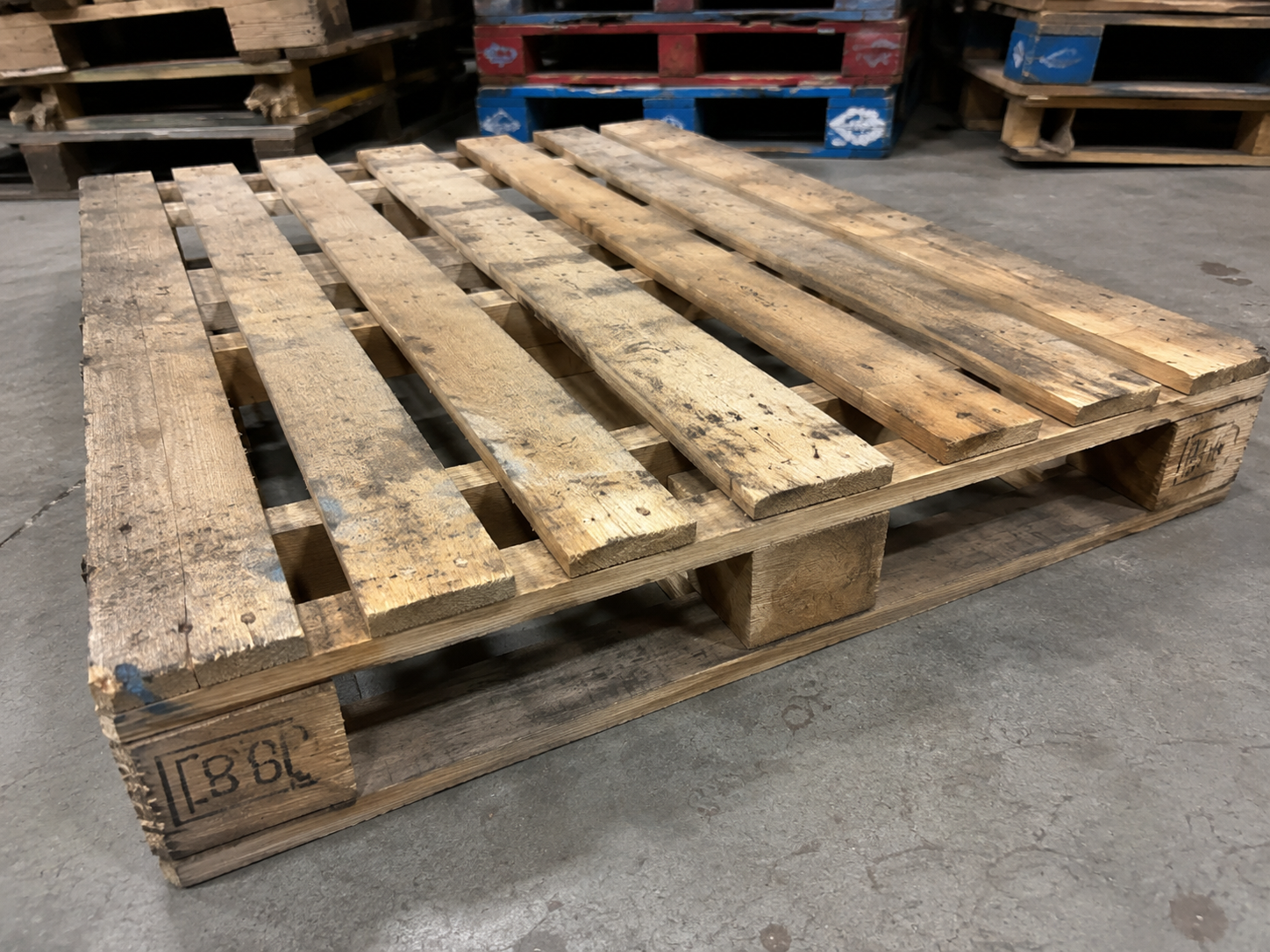
We stock recycled and new pallets, build custom pallets and skids to spec, and sell the parts too — collars, boxes, reclaimed lumber, and mulch. If it started as a pallet, we probably sell it.
Request a quote
Every field routes straight to our yard team. Tell us the product, the volume, and where you are — we reply by email within one business day.
How to choose
Four questions that pick the right pallet.
You don't need a spec sheet — you need to answer these in order. We'll do the rest.
Start with the load
Weight, dimensions, and how it stacks decide everything else. A 500 lb load of boxes and a 4,000 lb casting need very different pallets — one is a stock 48×40, the other is a custom-engineered skid.
Match the footprint
If your product, rack, or shipping container was designed around a size, buy that size. 48×40 GMA is the default, but odd footprints exist for a reason — don't force a load onto the wrong deck.
Pick a grade
Recycled Grade A for customer-facing or automated lines, Grade B for internal storage and one-way freight, new for export or zero-variance specs. Most warehouses run mostly recycled.
Confirm the journey
One-way expendable, closed-loop reuse, or international export all change the answer. Export means ISPM-15 heat treatment; closed loops reward durable, repairable pallets.
Grades & condition
Knowing your #1 from your #2.
Grade describes condition and repair history — not whether a pallet is safe. Most grades carry the same nominal load rating; the difference is finish, consistency, and price.
Grade A (#1)
The closest thing to new. All deck boards present, clean stringers, little or no repair. Right for automated lines, pool programs, and anything a customer sees.
Grade B (#2)
Repaired at least once or showing cosmetic wear. Same nominal load rating for typical static and edge-rack use, at a lower price. The default for internal storage and one-way freight.
Remanufactured
Rebuilt from sorted good boards salvaged from cores too far gone to repair whole. A budget option that keeps solid hardwood in service instead of the chipper.
New
Brand-new lumber, dead-consistent dimensions, no service history. For export, food-grade, pharma, and zero-variance automated handling.
Custom
Engineered to a specific load and footprint from new or reclaimed wood. Doubled stringers, plywood decks, and heavy-duty options for serious weight.
Reclaimed parts
Not whole pallets — de-nailed boards, stringers, runners, top caps, and mulch. For repairs, shoring, and maker projects.
Side by side
Compare the product line.
A quick map of what each product is best at, so you can narrow the list before you ask for a quote.
| Product | Best for | Typical cost vs. new | Lead time | Export-ready? |
|---|---|---|---|---|
| Recycled & used | Warehousing, domestic freight, one-way loads | 30–60% less | 1–5 days | Sometimes (HT stock) |
| New pallets | Export, food-grade, pharma, automated lines | Baseline | Made to order | Yes (ISPM-15 / HT) |
| Custom-built | Heavy machinery, odd footprints, crating | Varies with spec | Fast local build | Yes, on request |
| Collars & boxes | Reusable containers, bulk parts, returns | Reuse pays back fast | In stock | Depends on wood |
| Accessories & reclaimed | Repairs, shoring, maker & DIY projects | Lowest entry cost | In stock | N/A |
Reclaimed vs. new
Buy recycled unless the spec forbids it.
A recycled pallet is not a lesser pallet — it's the same hardwood, inspected and repaired, for a fraction of the price.
We'd rather sell you a Grade A recycled unit that fits than upsell a new pallet you don't need. New wood earns its place when the load is going overseas, into a food or pharma line, or through automation that can't tolerate any variance. Everywhere else, recycled saves money and keeps solid wood in circulation. When you're running a closed loop, durability matters more than newness: a well-built, repairable pallet cycles back through our yard for years.
Rule of thumb
- Export / pharma / food-grade → new, heat-treated.
- Automated AS/RS handling → new or Grade A.
- General warehousing → Grade A or B recycled.
- One-way expendable freight → Grade B recycled.
- Odd size or heavy load → custom-built.
Questions
Product FAQs
What's the difference between recycled and new pallets?
Recycled pallets are inspected, repaired used pallets — structurally sound and load-rated, at 30–60% less than new. New pallets deliver dead-consistent dimensions and appearance for export, food-grade, and automated handling. For most warehousing and domestic freight, recycled is the smart-money choice.
How do pallet grades work?
Grade A (#1) pallets are near-new: all deck boards present, clean stringers, minimal repair. Grade B (#2) pallets have been repaired at least once or show cosmetic wear but carry the same nominal load rating for typical use. 'Reman' (remanufactured) pallets are rebuilt from sorted good boards. We sort and band by grade so a bundle of #1s actually looks like #1s.
Which pallet size should I order?
The 48×40 GMA is the North American standard and what most racks, floor loads, and trucks are built around. If your product, rack bay, or shipping container was designed for a different footprint — 42×42, 48×48, 40×48, or the Euro 1200×800 mm — order that. See our size guide for the full breakdown.
Do you sell pallets in bulk?
Yes. We stock thousands of pallets and price by volume — the more you buy, the lower the per-unit cost. Order by the bundle or the truckload. Standing-order customers get first pick of fresh cores each week.
Can you build a pallet to a custom size?
Yes. Our fabrication shop engineers custom pallets and skids for oversized machinery, heavy castings, awkward footprints, and export crates — from new or reclaimed lumber, sized to your actual load and handling equipment.
Are your pallets export-ready?
We supply ISPM-15 compliant, heat-treated (HT) pallets stamped for international freight. Heat treatment kills pests without chemicals, so there's no bark and no fumigation. We can heat-treat new and custom builds alike.
What if I'm not sure what I need?
Describe your load, volume, and where it's going and we'll recommend the right product and grade before quoting. We'd rather point you to a cheaper recycled unit that fits than upsell you a new pallet you don't need.
Do you deliver, or is it pickup only?
Both. Our own trucks cover Greater Cincinnati, Northern Kentucky, and Southeast Indiana; truckload quantities reach farther. You're also welcome to pick up at our Este Ave yard. We reply to every request by email within one business day — no phone spam.
Not sure which pallet you need?
Describe your load and volume — we'll recommend the right product and grade, then quote it.